
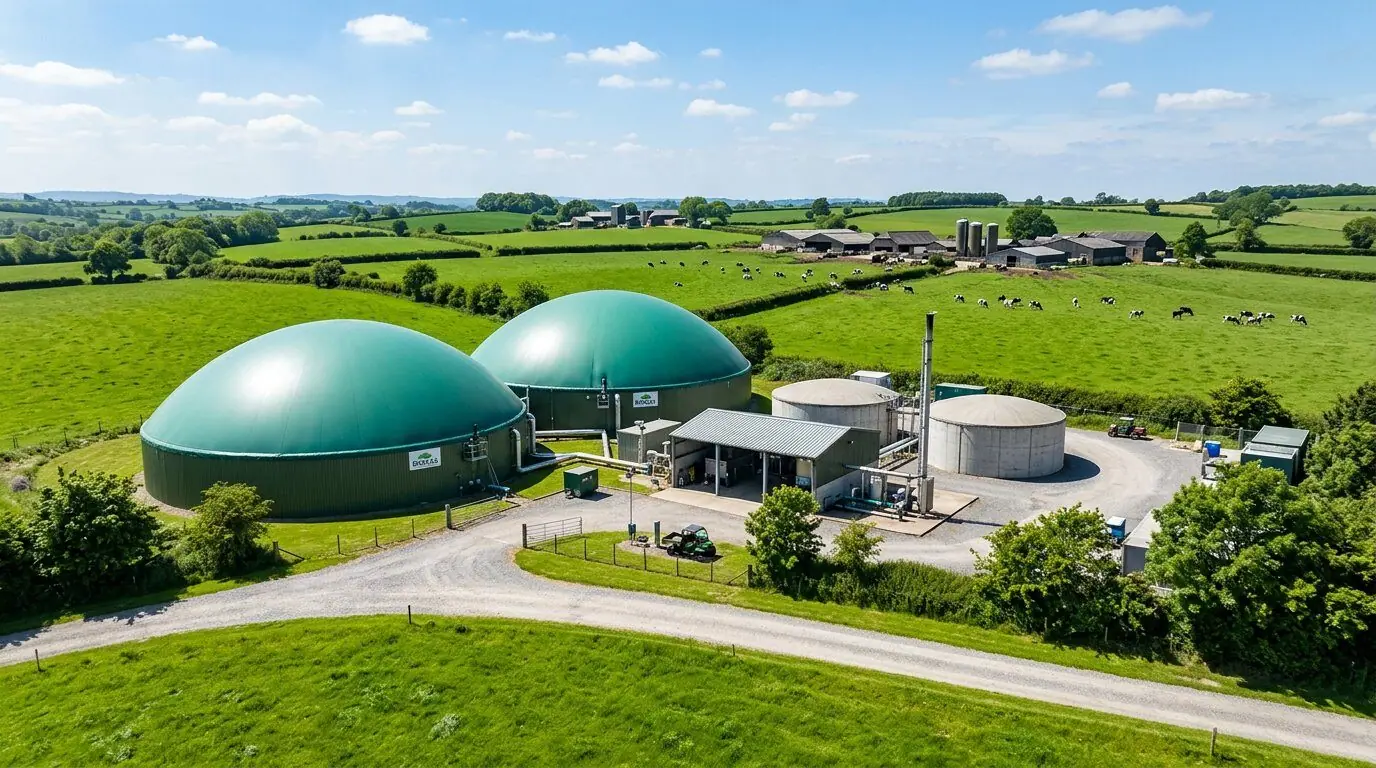
A biogas plant is a three-course restaurant for microbes: hydrolytic bacteria break down complex matter, acidogenic bacteria convert it to volatile fatty acids, and methanogenic archaea finish the job by producing methane. When the last course lags, acids accumulate, pH drops below 6.8, and gas production crashes — the classic 'sour digester'.
Diagnose before you dose
Check pH and the VFA:alkalinity ratio. A healthy digester holds pH between 7.0 and 8.0 with a VFA:alkalinity ratio under 0.3. Rising VFA with stable gas output is an early warning; falling pH with collapsing output means the methanogens are already in trouble.
Corrective action combines three moves: temporarily reduce loading by 30–50%, dose a methanogenic culture to rebuild the archaea population, and if needed buffer with alkalinity. Most sour digesters recover within 2–4 weeks with this protocol.
Beyond rescue: routine yield enhancement
You don't need to wait for a crisis. Regular maintenance dosing keeps methanogen density high, which is why our clients see 20–30% more gas from the same cattle dung or food waste — plus fewer foaming incidents and better digestate for sale as bio-manure.
Need help applying this in your plant?
Our technical team reviews your data and recommends the right program.