
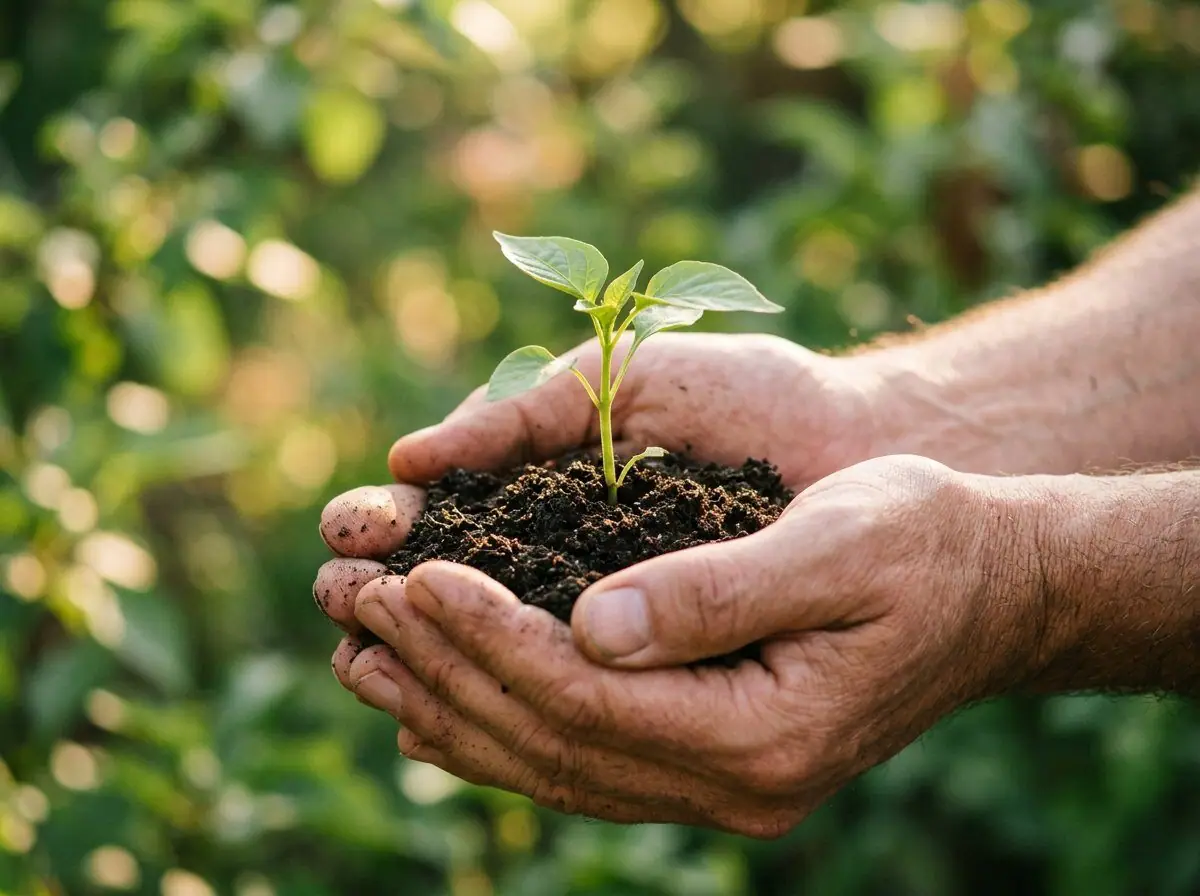
India generates over 1.7 lakh tonnes of municipal solid waste daily, and more than half of it is wet, organic waste. Processing it at source — in housing societies, markets and municipal centres — is the single most impactful step a community can take, and microbial cultures make that process fast and clean.
Get the basics right first
Composting success is 80% process and 20% culture. Segregate at source so plastics and inerts stay out. Balance nitrogen-rich kitchen waste with carbon-rich dry leaves, sawdust or coco peat (roughly 1:2 by volume). Keep moisture at a 'wrung-sponge' level — not dripping. Turn or aerate regularly so the pile stays aerobic.
Then let biology do the heavy lifting. Thermophilic cultures raise pile temperature to 55–65°C within days, which is exactly what you want: high temperature accelerates decomposition, kills pathogens and weed seeds, and suppresses odour-causing anaerobes.
What good looks like
With proper process and dosing, a society or municipal windrow operation can expect stabilised compost in 4–6 weeks followed by 2 weeks of curing. The finished compost should be dark, crumbly and earthy-smelling — ready for gardens, landscaping or sale to nurseries.
Need help applying this in your plant?
Our technical team reviews your data and recommends the right program.